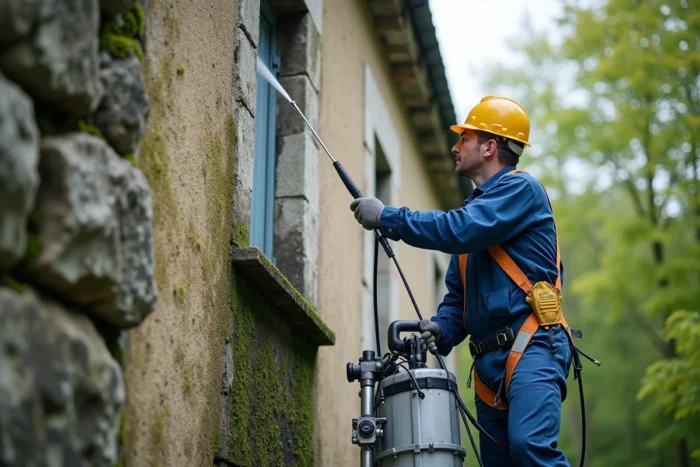
The cleaning of a house facade is not just a simple jet of high-pressure water. The amount of a quote depends on a combination of technical, geographical, and regulatory parameters that homeowners often underestimate. Some of these factors are predictable, while others arise at the time of diagnosis by the facade specialist.
Environmental and regulatory constraints: the invisible price factor
Competitors readily list the surface area, material, and technique. They rarely mention the impact of local environmental constraints on the final cost. In municipalities located by a river, in a water catchment area, or near a classified building, municipal or prefectural orders restrict the use of certain biocides. The contractor must then turn to compliant products, which are more expensive.
Additionally, there may be an obligation to collect rinse water to prevent soil pollution. This retention system requires additional equipment (tarps, pumps, tanks) and extends the duration of the project. Several Belgian service providers report that geographical location and regional environmental constraints directly influence their rates, with sensitive areas being more costly in terms of labor and suitable products.
To accurately estimate the price of house facade cleaning, it is essential to incorporate these regulatory surcharges from the outset of the quote request, specifying the exact address of the property and the urban context.
Facade material and cleaning technique: an inseparable pair
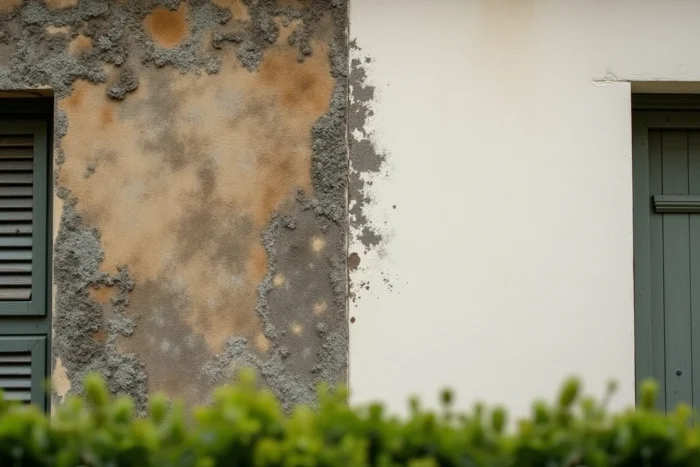
The material is the primary technical criterion that a facade specialist evaluates before providing a quote. A stone facade cannot be cleaned like synthetic plaster or wooden cladding. The choice of method directly stems from this analysis, and each technique has its own cost level.
The available data allows for a pricing hierarchy among common processes:
- High-pressure cleaning remains the least expensive method, but it is contraindicated for porous or fragile materials (soft stone, old brick, lime plaster).
- Chemical cleaning and nebulization fall into an intermediate range. Nebulization, which projects a prolonged mist of water, is suitable for stone facades but requires several hours of treatment.
- Grit blasting, hydrogommage, and sandblasting represent the most expensive techniques. They are reserved for stubborn dirt or materials requiring delicate surface treatment.
- Sanding, used on certain hard stones, reaches the highest rates per square meter.
A poor pairing between technique and material can damage the facade and result in repair costs exceeding the cleaning itself. This is why a prior diagnosis by a professional is not a luxury but a technical precaution.
Surface area, level of dirtiness, and building accessibility
The surface area to be treated is the most obvious calculation basis. Quotes are generally expressed per square meter, and the price per square meter often decreases as the surface area increases, as the contractor amortizes their fixed costs (travel, setup, scaffolding) over a larger area.
The level of dirtiness weighs just as heavily. A regularly maintained facade, showing a slight grayish veil, cleans much faster than a wall covered in moss, lichens, or black pollution marks accumulated over several decades. In this second case, a prior biocide treatment and a longer application time increase the bill.
Building accessibility is a parameter that homeowners frequently overlook. A single-story house with a clear garden poses no difficulty. In contrast, a multi-story house, terraced or bordered by a public road requires scaffolding, or even a lift. In recent years, the rental cost of scaffolding and public domain occupation permits has increased, which directly impacts the quote.
Additional treatments after cleaning: the often-overlooked item
Cleaning alone does not protect the facade in the long term. Many quotes include, optionally or by default, a water-repellent or anti-moss treatment applied after cleaning. This treatment creates a barrier against moisture and slows down biological recolonization.
The water-repellent can represent a significant portion of the total quote. Its cost depends on the type of product (film-forming or non-film-forming), the porosity of the substrate, and the number of necessary coats. On a porous stone facade, two passes are sometimes essential.
Some facade specialists also offer facade painting following the cleaning. This service falls under complete renovation and shifts the budget into another category. Field feedback varies on the relevance of combining the two interventions: bundling can save on scaffolding, but the overall budget mechanically increases.
Regional disparities and seasonality of rates
The prices charged vary from one region to another, even within the same country. In densely populated urban areas, labor and equipment parking costs are higher than in rural areas. Large metropolitan areas consistently show higher rates, particularly due to logistical constraints (limited access, regulated parking, administrative permits).
The time of year also plays a role. Facade cleaning is ideally performed in spring or autumn, when temperatures are moderate and humidity is sufficient for the products to work effectively. During these periods, demand increases, and some contractors adjust their rates accordingly. Requesting a quote during off-peak times (winter, frost-free) can allow for negotiation.
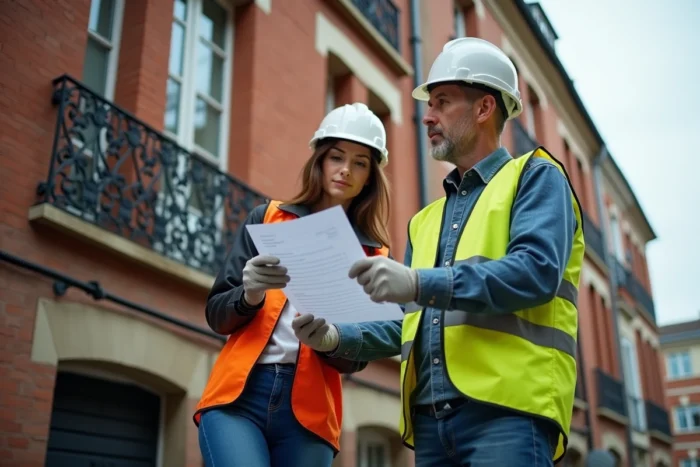
Each facade presents a unique combination of material, exposure, height, and regulatory context. The only reliable way to compare is to request several detailed quotes, specifying all these parameters, rather than relying on a generic price range found online.