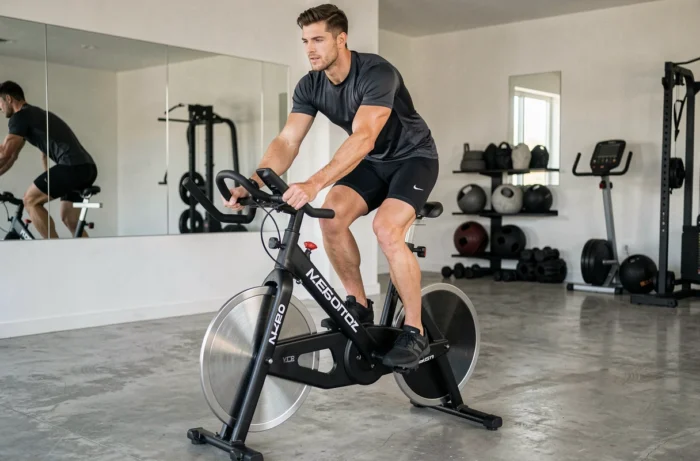
The Sportstech SX200 occupies a unique niche in the market for exercise bikes. Marketed as a speedbike aimed at indoor biking, it targets users looking for a pedaling experience similar to that of spinning classes. Behind the marketing promise, the mechanical base of this device deserves careful examination to understand what it truly offers in practice.
Belt drive and friction resistance: what this means in daily use
The SX200 relies on a belt drive system, a common choice for biking bikes in this price range. The belt ensures quiet operation compared to a chain, making the device suitable for apartment use without disturbing neighbors.
The resistance, on the other hand, operates through friction. A felt pad presses against the flywheel when the user turns the adjustment knob. This mechanism is entirely manual: no magnetic resistance, no predefined levels displayed on the screen.
This design has direct consequences. The friction from the pad eventually leads to wear on the felt and a contact noise that gradually appears. User feedback varies on this point: some users report silent operation for several months, while others notice audible friction sooner. Applying a bit of lubricant to the contact area between the pad and the wheel usually resolves the issue, but one must accept this periodic maintenance. In reviewing the Sportstech SX200 speedbike, this observation about the durability of the friction braking system is also noted.
22 kg flywheel: pedaling smoothness and limits
The flywheel of the SX200 weighs 22 kg, a weight that places it in the upper average of speedbikes intended for home use. This weight directly impacts the smoothness of the movement: the heavier the mass, the smoother the pedaling remains during acceleration phases.
For sustained cardio training or interval training sessions, this inertia provides a pleasant sense of continuity. The pedal does not “drop” between pedal strokes, bringing the experience closer to that of a gym spinning bike.
The limit lies with very powerful users. Without magnetic resistance with levels, the adjustment of difficulty remains approximate. The manual knob provides no numerical indication of the level of resistance applied. Reproducing exactly the same load from one session to another relies on feel rather than measurement, which can frustrate athletes accustomed to precise tracking of their progress.
SX200 console, app, and connectivity
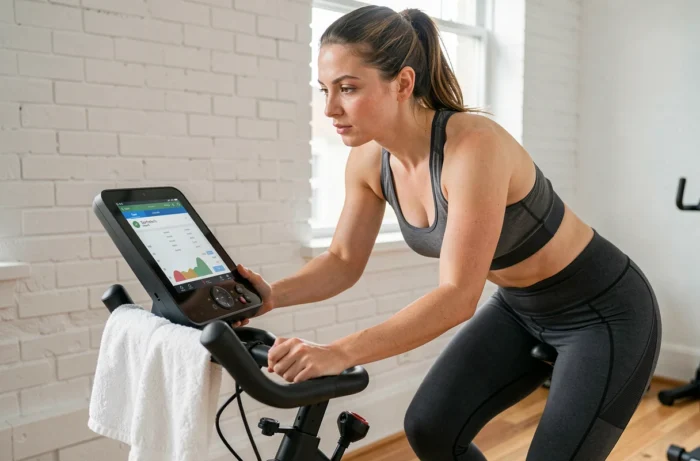
The SX200 features a 5.5-inch screen that displays basic data: speed, distance, duration, estimated calories, and heart rate (via the pulse sensors integrated into the handlebars). The device is also compatible with heart rate belts, providing a more reliable measurement of heart rate during exercise.
In terms of connectivity, the bike operates via Bluetooth and connects to the Kinomap app. This compatibility opens access to video routes and a more structured training tracking than what the native console offers alone.
One point deserves attention: data collection by connected fitness apps is a topic that is gaining traction in 2026. Connected devices transmit personal information (heart rate, training habits, geolocation in some cases). The available data does not allow for conclusions about Kinomap’s specific practices in this area, but the question of health data privacy should be raised before connecting any device to a third-party app.
What the console does not do
The absence of motorized resistance means that the app cannot automatically adjust the difficulty based on the chosen route. On a bike with controlled magnetic resistance, Kinomap adapts the load in real-time according to the profile of the virtual terrain. On the SX200, this adaptation remains manual. This is a significant functional difference that the product sheet does not always highlight.
Ergonomics and maximum supported weight: for what type of user
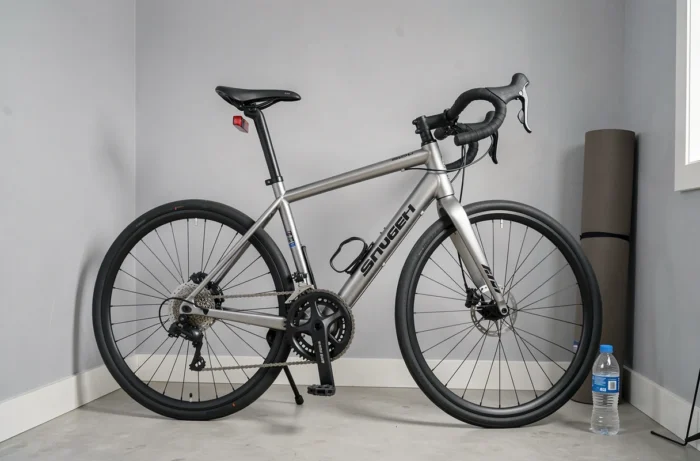
The SX200 supports a maximum user weight of 125 kg. The seat and handlebars are adjustable in height, with a seat height range from 71 to 90 cm according to the manufacturer’s specifications. The device itself weighs 44 kg, providing good stability on the floor during intense sessions.
The dimensions remain compact: just over a meter in length and about 54 cm in width. This makes it compatible with most rooms in an apartment, provided there is enough clearance space around it for comfortable mounting and dismounting.
- Strap pedals suitable for use with standard sports shoes, without automatic cleat systems
- Multi-position handlebars that allow for varying grips (road position, triathlon position, raised position)
- Integrated transport wheels for moving the device despite its weight
Assembly is described as accessible by most sources, but still requires a good hour and a minimum of tools. The instructions provided by Sportstech have received mixed reviews regarding their clarity.
Value for money of the Sportstech SX200 in the indoor biking market
The SX200 is positioned in a mid-range price segment. Its value for money remains its main argument against more expensive competitors that incorporate motorized magnetic resistance and a more advanced console.
For regular use focused on cardio and leg strengthening, the mechanical base of the SX200 fulfills its role. The 22 kg flywheel and belt drive provide a solid foundation. However, the lack of automatic resistance control and manual adjustment without numerical markers are real limitations for structured training over time.
Ultimately, the choice depends on what one expects from an indoor bike. A reliable mechanical training device, yes, but not a high-end connected simulator. This distinction, rarely articulated so clearly in product sheets, nonetheless conditions the long-term satisfaction of the user.