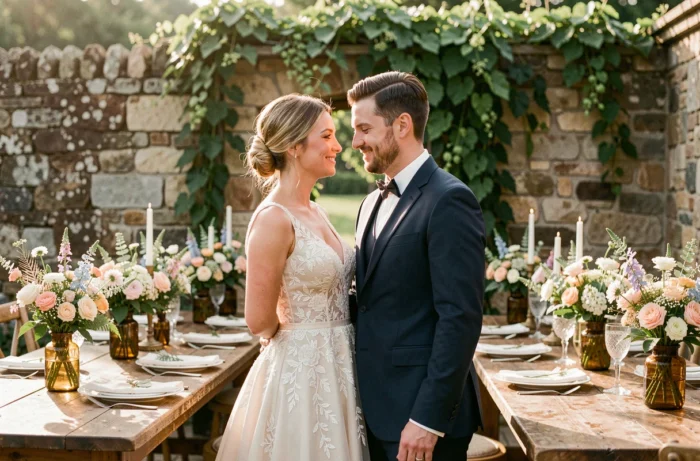
A wedding described as unique does not rely on the accumulation of decorative ideas taken from lists. It is built like a narrative: each choice of location, rhythm, table, or ritual reflects a concrete aspect of the couple’s story. This approach, which organizers call narrative personalization, is gradually replacing standardized aesthetic themes (bohemian, rustic, industrial) with a universe shaped around shared memories, passions, or commitments.
Building a narrative thread rather than a decorative wedding theme
The difference between a theme and a narrative thread lies in the source of inspiration. A theme starts from an aesthetic: colors, materials, visual references. A narrative thread starts from the couple: a foundational trip, a shared passion, a place that marked their meeting.
Translating this thread into the reception requires a work of coherence. The menu can reflect the flavors of a country discovered together. The seating plan can be organized by life chapters rather than by numbers. The invitations can borrow vocabulary from a shared universe (music, literature, sports) without falling into disguise.
What makes the day unforgettable for the guests is understanding why each detail exists. A readable wedding is more memorable than a spectacular wedding. When guests perceive the connection between the choice of venue, the first piece of music, and the dessert, the reception takes on an emotional dimension that no isolated entertainment can produce.
To explore decoration and accessory options that serve this type of staging, consulting Mariage et Décoration online allows for visualizing coherent combinations before finalizing choices.
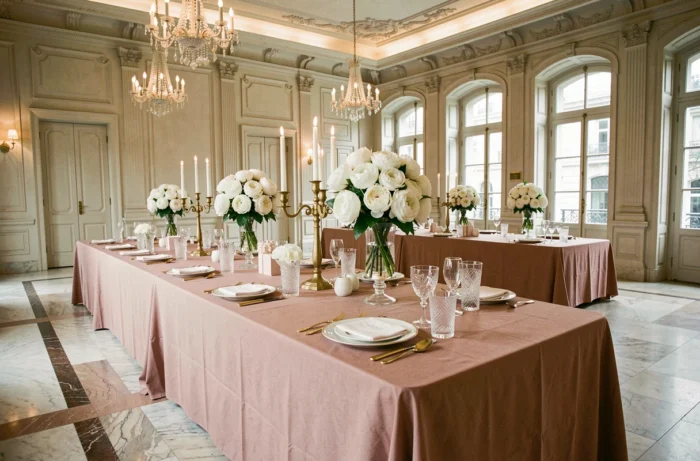
Slow wedding: reducing the format to amplify the guest experience
The slow wedding is based on a simple principle: fewer guests, fewer service providers, but a radically superior quality of interaction. This approach increasingly structures weddings organized in small committees, often over an entire weekend rather than just one evening.
What the format changes concretely
Reducing the guest list profoundly alters the logistics. A meal for thirty people allows for a multi-course tasting menu, with local products selected by the couple. The exchanges between guests are genuine, not superficial.
The rhythm of the day also changes. Removing the classic sequence (ceremony, cocktail, meal, dance party) allows for slow moments: a collective walk, a participatory ritual, a shared moment of silence. The wedding becomes a stay rather than a timed event.
Balancing intimacy and family expectations
The main obstacle to a slow wedding remains social pressure. Limiting invitations to close family and friends sometimes causes tensions. Making this choice early, as soon as the wedding is announced, and explaining it as a conscious decision (not as a budget constraint) facilitates acceptance.
Some couples organize a second, more open event a few weeks after the intimate ceremony: a brunch, a garden party, an aperitif. This solution preserves the intensity of the main day without excluding a wider circle.
Unconventional reception venue: selection criteria beyond aesthetics
The venue determines the atmosphere more than any other aspect. A campsite with a reception hall, a boat, a marquee in the countryside: unconventional options are multiplying. The trap is choosing a venue for its visual originality without checking practical constraints.
Before signing, checking these points avoids unpleasant surprises:
- The actual seating capacity for a sit-down meal, not just for standing cocktails, which artificially inflates the numbers.
- Accessibility for people with reduced mobility and the distance from the nearest accommodations, especially for an isolated venue.
- Noise restrictions imposed by the municipality or the owner, which may require cutting off music well before midnight.
- The presence or absence of an equipped kitchen: a caterer working without on-site infrastructure charges a significant extra cost.
An ill-prepared unconventional venue costs more than a well-negotiated classic venue. The originality of the setting does not compensate for complicated access or under-dimensioned logistics.
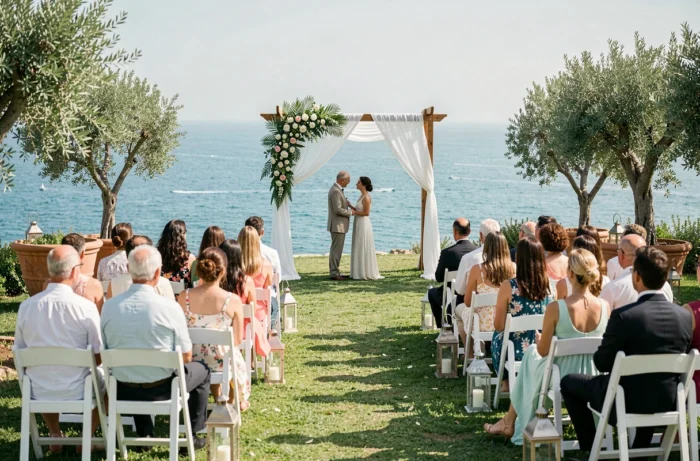
Personalized wedding decoration: avoiding the trap of over-accessorization
Decoration serves the narrative thread, not the other way around. Multiplying decorative elements without a connection creates a cluttered effect that dilutes the identity of the reception. Three or four strong, coherent choices are enough to visually mark a space.
A centerpiece designed around personal objects (books, vinyl records, travel photos, plants grown by the couple) tells more than a standardized floral arrangement. The choice of tableware, menu holders, and lighting matters more than the quantity of garlands.
Each decorative element must answer a question: why this one and not another? If the answer is “because it’s pretty,” the element is interchangeable and thus forgettable. If the answer refers to a memory or an intention, it becomes a marker of the day.
The decoration budget as a prioritization tool
Allocating the decoration budget to two or three high-impact areas (ambient lighting, the design of the head table, the venue entrance) rather than spreading it across ten minor details produces a clearer result. Guests remember an overall atmosphere, not an accumulation of small objects.
Choosing sustainable or reusable materials (raw wood, natural fabrics, glass containers) also reduces post-reception waste, a criterion that more and more couples are incorporating into their planning.
Organizing a wedding that remains memorable does not come from having the highest budget or the longest list of entertainment. The coherence between the venue, rhythm, decoration, and the couple’s story creates a day that guests will always associate with something specific, not just “another beautiful wedding.”