
SNCF retirees are subject to a special social protection scheme, managed by the Caisse de prévoyance et de retraite du personnel de la SNCF (CPRPSNCF). This particular affiliation determines both the contacts to reach out to and the support systems available during a change of residence. Understanding this framework before starting any process helps avoid unnecessary administrative back-and-forth.
SNCF Special Scheme and Consequences for Moving Assistance
The CPRPSNCF manages health insurance, retirement, and social action for railway workers. For a former employee, this means that the standard assistance from complementary funds like Agirc-Arrco does not apply. A retiree from the general scheme can request Agirc-Arrco for partial reimbursement of moving expenses, capped according to the region. An SNCF retiree must turn to the specific provisions of their scheme.
The social action of the CPRPSNCF offers services intended to support former railway workers in their daily lives, including during a move related to loss of autonomy or family reunification. Eligibility conditions and amounts vary depending on individual circumstances. To know exactly what benefits you may be entitled to, the first step is to contact the CPRPSNCF directly or consult a specialized advisor in moving assistance for SNCF retirees to evaluate your case.
This point often causes confusion: many retired railway workers begin their processes with Carsat or CAF, while these organizations do not manage their files. Checking one’s affiliation before any request can save several weeks.

MaPrimeAdapt’: Financing the Adaptation of the New Home After a Move
Since 2024, MaPrimeAdapt’ has become the main state aid for financing the adaptation of seniors’ homes. It covers concrete works: installation of a walk-in shower, widening of doors, installation of ramps, or non-slip flooring.
For households with modest or very modest resources, the coverage can represent a majority share of the cost of the works, within the limits of a spending cap set by official scales. This scheme applies to any retiree, regardless of their scheme, provided the home is a primary residence.
The determining factor for an SNCF retiree who is moving: MaPrimeAdapt’ can be combined with retirement fund assistance and the Housing Solidarity Fund. A former railway worker can therefore finance transportation and handling through the CPRPSNCF, and then the adaptation of the new home through MaPrimeAdapt’. This combination covers two distinct expense categories and significantly reduces the remaining costs.
Preparing the MaPrimeAdapt’ Application
The application is made online, on the website of the Agence nationale de l’habitat (Anah). You need to provide a housing diagnosis carried out by a certified professional, quotes for the planned works, and proof of income. Processing times vary, but anticipating the application before the move allows for the works to begin as soon as you move in.
Administrative Procedures Specific to SNCF Retirees
A move triggers a series of mandatory updates. For a retiree from the general scheme, the list is known (Carsat, mutual insurance, taxes). For a former railway worker, the contacts are different, and the timing matters.
- Report the change of address to the CPRPSNCF as soon as possible to avoid any interruption in pension or social action benefit payments.
- Update your contact information with the railway workers’ mutual insurance (if you are affiliated), as it manages health reimbursements independently of the CPRPSNCF.
- Notify the Tax Center of your old and new addresses, as well as the treasury concerned for property tax if you are a homeowner.
- Inform energy suppliers, the Post Office (for mail forwarding), and your bank, as you would for any standard move.
The most common oversight concerns the railway workers’ mutual insurance, as retirees assume that the CPRPSNCF automatically transmits the information. This is not always the case. A separate notification is recommended.
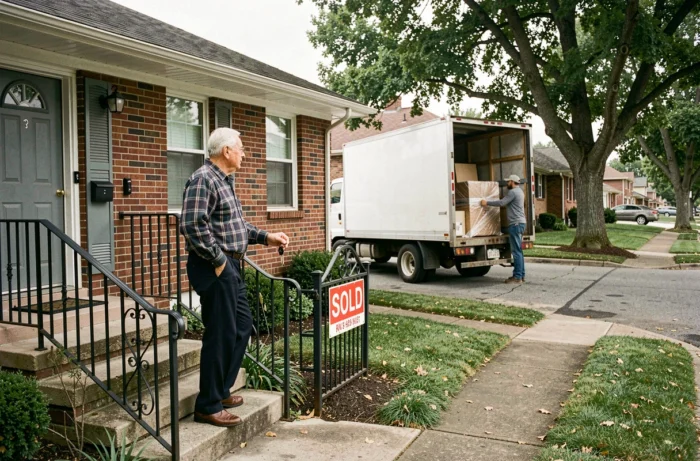
Housing Solidarity Fund and Additional Assistance for Retirees with Modest Incomes
The Housing Solidarity Fund (FSL), managed by each department, can cover part of the installation costs: security deposit, first month’s rent, agency fees. This scheme is aimed at individuals in financial difficulty, regardless of retirement scheme.
For an SNCF retiree with a modest pension, the FSL serves as a complementary lever. The application is made through the department of the new residence, often via a social worker or a CCAS. Response times vary from one department to another, and income caps are not uniform across the territory.
Combining Assistance: What is Possible
An SNCF retiree can, in theory, combine three sources of funding for the same move:
- The social action of the CPRPSNCF for transportation and handling costs.
- MaPrimeAdapt’ for the adaptation works of the new home.
- The FSL for installation costs (security deposit, first rent).
Each aid covers a different expense category. None finances the same expense twice, making the combination legitimate. The challenge lies in coordinating the timelines: processing times are not synchronized, and starting the procedures at least three months before the planned moving date remains a reasonable precaution.
The move of an SNCF retiree does not follow a standard path. The specificity of the special scheme requires to contact the right interlocutors from the start and to verify each eligibility condition on a case-by-case basis. A well-prepared file, with all three sources of funding activated in parallel, transforms a costly project into a financially manageable operation.