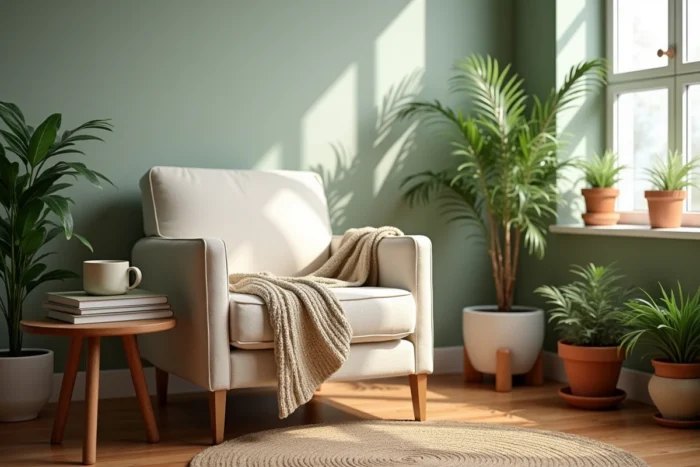
The color temperature of lighting fixtures, the choice of acoustic wall coverings, or the layering of textile materials determine the sensory perception of an interior much more than the accumulation of decorative objects. Transforming a house into a cocoon of well-being relies on precise technical decisions, often overlooked by purely aesthetic approaches.
Color Temperature and Light Spectrum: The Underestimated Lever of Interior Well-Being
Artificial light drives the ambiance of a room with more impact than the color of the walls. We recommend working with layered lighting rather than multiplying light points on the ceiling. Indirect lighting with LED strips, set to a color temperature between 2,700 and 3,000 kelvins, creates an enveloping atmosphere without straining the eyes.
In the bedroom, going below 2,700 K promotes melatonin production in the evening. In a living space, combining functional pendant lighting (around 4,000 K for the kitchen area) with warm spectrum accent lamps creates a contrast that visually structures the room without compartmentalizing it.
A common mistake is to install a dimmer on a fixture whose spectrum does not change. A dimmer reduces intensity, not color temperature. To achieve a true cocooning effect in the evening, you need either adjustable spectrum bulbs or a dedicated circuit with warm sources. This type of technical detail is documented on the home page of Ta Maison Ton Jardin, which addresses interior design from a practical angle.

Absorbing Materials and Acoustic Comfort in a Zen Cocoon
A visually successful but acoustically reverberant interior generates measurable cognitive fatigue. Smooth surfaces (tiles, polished concrete, large bay windows) reflect sound and create a constant background noise that hinders relaxation.
We observe that the addition of textile materials with variable density radically transforms the perception of a room. Thick washed linen curtains, a long-pile rug under the coffee table, and corduroy cushions on the sofa: each textile layer absorbs a different range of frequencies.
Zone Absorption Strategy
- Living Room: a rug large enough to go under the front legs of the sofa, combined with floor-length curtains, noticeably reduces reverberation from the first days
- Bedroom: a tufted headboard and a thick knit bed throw create an acoustic cocoon around the sleeping area
- Bathroom: a fabric curtain instead of a glass wall, a dense bath mat, and possibly a woven wicker basket are enough to break the echo of the tiles
The wall-mounted acoustic panel made of felt remains an effective option for rooms with high ceilings, but its aesthetic rendering is divisive. A natural cork wall, installed in tiles, offers comparable absorption with a more organic look.
Colors and Natural Pigments: Choosing a Palette That Calms Without Darkening
Terracotta, sage green, and muted blue shades saturate decor blogs, but their implementation requires caution. A natural lime pigment does not behave like acrylic paint: it evolves with daylight, gains depth as it dries, and partially absorbs ambient humidity.
For a successful cocooning atmosphere, we favor matte or velvety finishes. Satin paint reflects artificial light and creates shiny spots that disrupt the feeling of enveloping. In contrast, a lime plaster tinted in mass produces micro-surface variations that capture light without reflecting it.
Color Coordination by Room
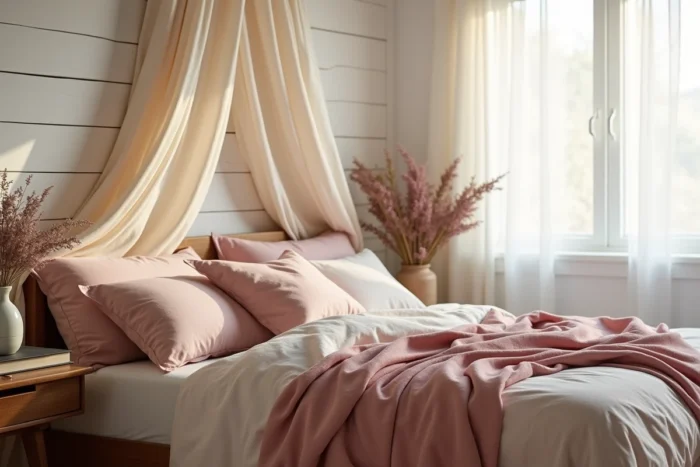
The bedroom can support more muted tones (warm gray, old rose, rosy beige) than the living room, where an excess of dark colors compresses the space. In a bright living area, a deep olive green wall works as a visual anchor. In a poorly lit space, it’s better to stick to a warm off-white (like tinted Meudon white) and bring color through textiles and plants.
Indoor Plants and Natural Hygrometric Regulation
Plants contribute to the well-being of an interior beyond their decorative role. Some species naturally regulate the humidity level of a room by absorbing excess moisture in the air and then releasing it when the atmosphere dries out.
The spathiphyllum, chlorophytum, and nephrolepis (Boston fern) are among the most effective species for this purpose. Their placement is as important as their choice: a fern in the bathroom takes advantage of the ambient humidity, while a chlorophytum hanging in the reading corner filters the air without occupying floor space.
Beware of the opposite effect: too many plants in a poorly ventilated room can maintain excessive humidity, promoting mold growth. A good indicator remains condensation on windows in the morning. If it persists after airing out, you need to reduce the number of plants or improve ventilation.
Creating a Relaxation Corner: Dimensions and Ergonomics
A reading or meditation corner only works if its dimensions correspond to its use. An armchair pushed against a wall with a floor lamp is not enough to create a retreat space. The seat must allow for leg folding (minimum seat depth of around 55 cm), and the light source should come from behind or the side, never from the front.
Arranging this corner in a room’s angle, slightly set back from the flow of traffic, enhances the feeling of intimacy. A rattan screen or an open bookshelf placed perpendicular to the wall creates a visual separation without compartmentalizing the space.
The flooring under this corner also deserves special attention. A looped wool rug, distinct from the main flooring, physically signals the transition to the relaxation area. Bare feet perceive the change in texture, and the brain associates this area with a pause.
Every technical decision, from light spectrum to curtain weight, contributes to an overall sensory coherence. A cocoon of well-being is not declared by the accumulation of objects but by mastering the interactions between light, sound, texture, and perceived temperature in each room.