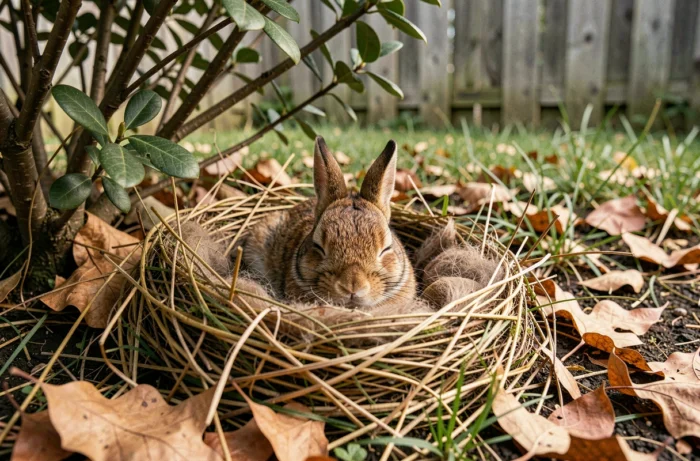
Every spring, walkers or garden owners discover a solitary bunny in the grass, with no visible trace of its mother. The first instinct is often to take it in. This understandable reaction, however, proves counterproductive in the vast majority of cases. The mother rabbit exhibits very different maternal behavior compared to a cat or dog: she does not stay with her young continuously, and her prolonged absence is part of her normal care routine.
Maternal behavior of the rabbit: why absence does not mean abandonment
The mother rabbit nurses her bunnies only once or twice a day, usually at dawn and dusk. The rest of the time, she deliberately distances herself from the nest. This behavior, inherited from wild life, aims to avoid attracting the attention of predators to the litter.
A bunny alone in a nest in the middle of the afternoon is therefore not an abandoned bunny. It is a bunny whose mother will return a few hours later. Several specialized care centers emphasize this point: the mother returns to feed her young even if she remains invisible.
Before intervening, it is essential to assess the situation based on concrete criteria and not on the emotion of the moment. The solutions proposed by X Anima detail this logic of prior observation, which remains the foundation of any responsible decision regarding an apparently solitary bunny.
Signs of real distress in a bunny: criteria to check
The distinction between a healthy bunny and one in danger relies on a few specific physical indicators. Direct, quick observation without excessive handling allows for a decisive assessment.
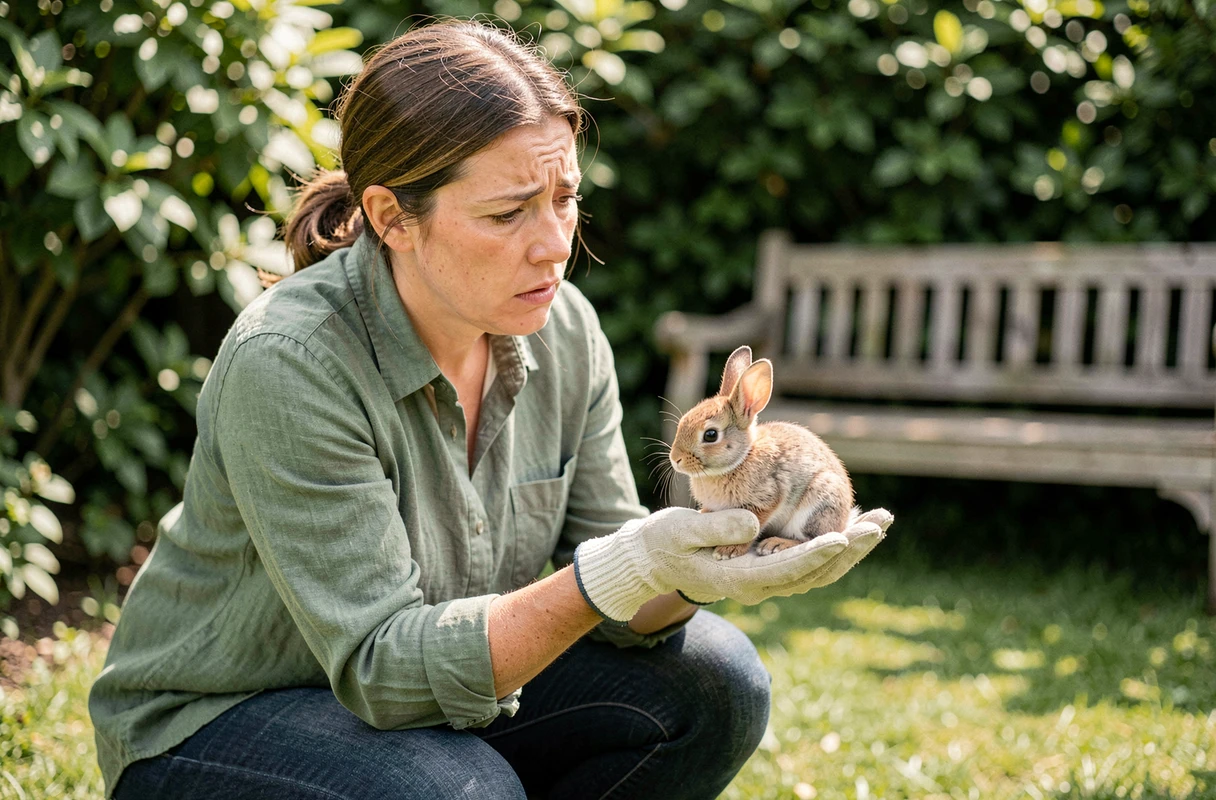
- Body temperature: a warm bunny to the touch has probably been fed recently. A cold bunny, on the other hand, may have missed several feedings and be in hypothermia.
- Skin and belly appearance: a rounded belly and taut skin indicate good nutritional status. Wrinkled, sagging skin signals dehydration or prolonged fasting.
- Presence of injuries, visible parasites, or flies around the young: these signals call for prompt care.
- Behavior: a bunny lying on its side, unresponsive to stimuli, or appearing very weak requires external help.
If none of these signs are present, the best option remains to avoid touching the bunny and to monitor the nest from a distance for at least twelve hours.
The thread or flour test
To determine if the mother returns at night, a simple method is to place a few strands of thread or a thin layer of flour around the nest. If the setup is disturbed the next morning, the mother has indeed passed by. This test helps avoid unnecessary intervention that could, in reality, cause the mother to permanently abandon the litter.
Handling a bunny: concrete risks and precautions
Human handling represents a major stress factor for bunnies. Contrary to a persistent misconception, human scent does not systematically cause rejection by the mother. However, the stress generated by repeated movements, a noisy environment, or a change of nest can be enough to disrupt the maternal bond.
If you have already touched a bunny, gently rubbing it with surrounding grass or soil can mitigate the olfactory traces. Replace it in its original nest if it is identifiable and intact.
A bunny returned to its nest has a better chance of survival than a bunny taken care of by an untrained human. Survival rates in artificial breeding remain low, even with suitable equipment, because the composition of rabbit milk is very specific and difficult to replicate.
Emergency feeding of an orphaned bunny: common mistakes
When abandonment is confirmed (mother deceased, nest destroyed, injured bunny with no maternal return observed), the temptation to feed the young one yourself is strong. This is also when the most serious mistakes occur.
Cow’s milk is to be avoided
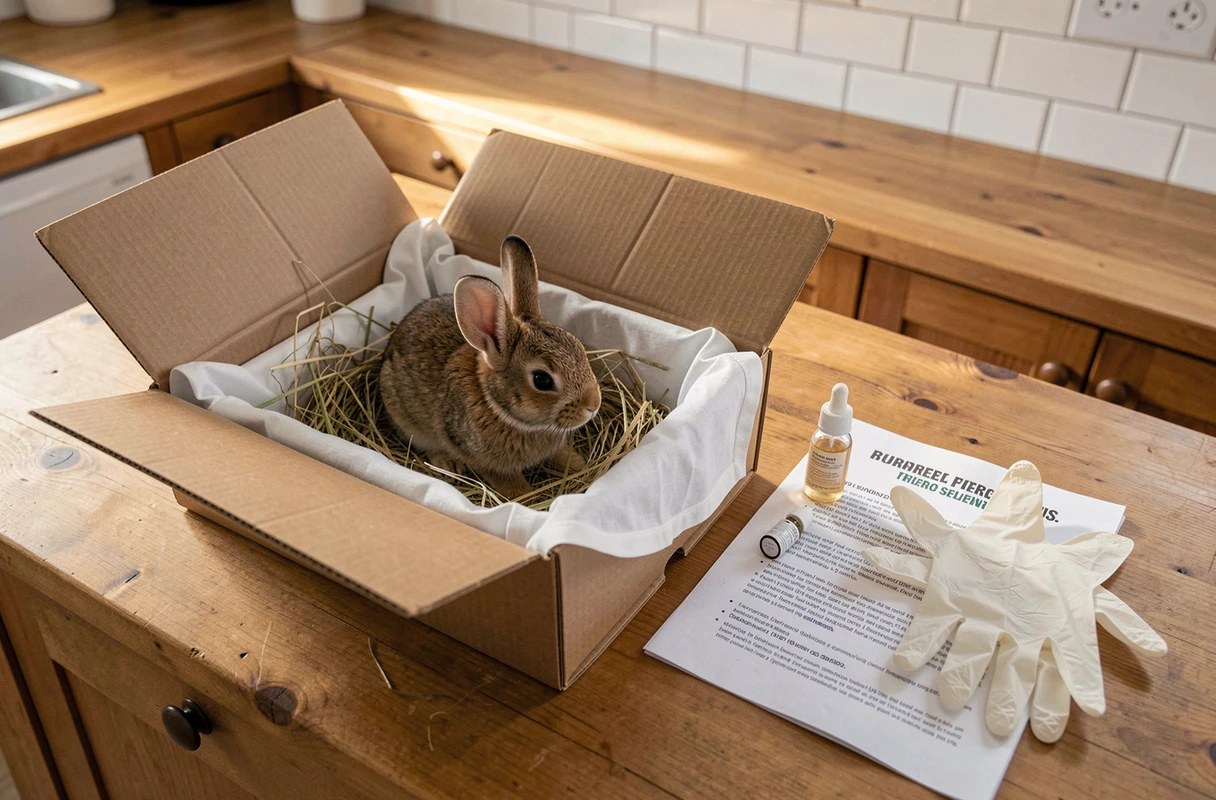
Cow’s milk is not suitable for bunnies. Its composition of fats and proteins differs radically from that of rabbit milk. Only kitten milk replacer can serve as an acceptable emergency substitute, possibly enriched with a teaspoon of thick cream to approximate the necessary fat content.
The administration itself carries risks. A bunny that inhales liquid into its airways (aspiration) can develop fatal pneumonia within hours. Using a small-volume syringe, without a needle, with a drop-by-drop distribution reduces this danger.
Warm up before feeding
One point that specialized sources emphasize: feeding a bunny in hypothermia is useless, even dangerous. The digestive system of an animal in hypothermia does not function properly. Warming must precede any feeding attempt, through body contact or using a hot water bottle wrapped in a cloth.
Contacting a bunny care center: the right reflex
As soon as the situation exceeds simple observation (injured bunny, entire litter without a mother after verification, very young animal with eyes still closed), turning to a professional becomes the only reasonable option. Wildlife rehabilitation centers and veterinarians specialized in exotic pets (NAC) have the equipment and expertise to care for these fragile animals.
In France, organizations like wildlife care centers affiliated with the LPO or associations dedicated to lagomorphs can guide individuals. Making a phone call before any travel allows for receiving instructions tailored to the specific situation of the found bunny.
Keeping a wild bunny at home without permission is also prohibited in most European regulatory frameworks. Transferring to an authorized center protects both the animal and the individual.
In the face of an isolated bunny, patience and observation remain the most effective actions. The majority of situations resolve themselves when the mother returns at dusk. When intervention is necessary, it should remain minimal, targeted, and ideally quickly followed up by a specialist.