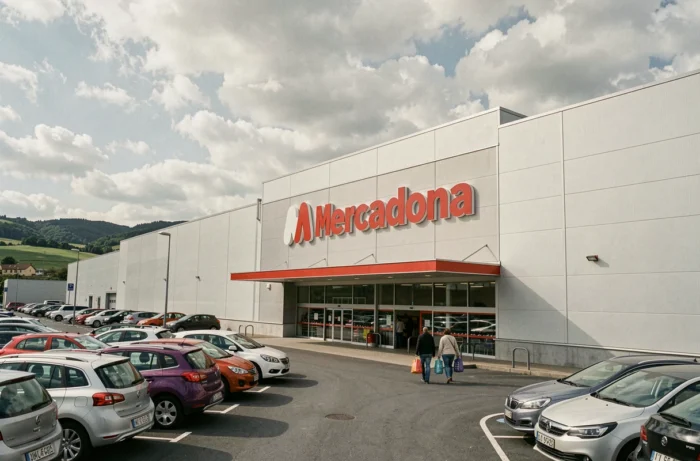
Mercadona does not have any stores in France. The Spanish chain, with its own budget brands, attracts many French consumers willing to cross the border. But before hitting the road, one question deserves to be asked: is the trip to the nearest Mercadona really worth the detour compared to your usual shopping?
Break-even point: when the trip to Mercadona becomes advantageous
You live in Perpignan, Bayonne, or Toulouse. You’ve heard about Deliplus cosmetics, Hacendado canned goods, and prices that challenge French competition. The temptation is real. The question remains whether the trip is financially justified.
The calculation seems simple: round-trip fuel cost, possible tolls, time spent on the road. In practice, the answer depends on your starting point. From Perpignan, the first Mercadona stores are located in Figueres, just across the Catalan border. The trip is short. From Toulouse, the distance doubles, and road expenses quickly eat into the savings made in-store.
For a Mercadona trip to be profitable, the price difference on your shopping basket must exceed the total cost of the trip. For common products (pasta, canned goods, milk), the unit difference remains modest. The interest is concentrated on specific categories: private label cosmetics, cleaning products, and certain food specialties absent from French shelves.
In other words, if you go to fill a cart with targeted products, the trip can be justified. For just a few items, a local supermarket or drive is more rational.
Mercadona Figueres and La Jonquera: border stores accessible from France
When looking for the nearest Mercadona store to France, two names consistently come up: Figueres and La Jonquera. These two Spanish towns are located just after the Catalan border, accessible from the south of France in less than an hour for residents of the Pyrénées-Orientales.
Mercadona Figueres is located on Carrer Sant Llàtzer, in an easily accessible shopping area. La Jonquera, on the other hand, is known for its cross-border shopping center that already attracts buses of shopping tourists from the south of France.
From the French Basque Country, the situation is different. The nearest Mercadona stores are further inland in Spain, making the trip less spontaneous. The Perpignan-Figueres corridor remains the shortest and most convenient for a same-day round trip.
Starting points and accessibility
- From Perpignan: Figueres is the logical choice, with a short trip via the AP-7 highway on the Spanish side. The store’s parking is free, which avoids an often-overlooked extra cost in the calculation.
- From Narbonne or Montpellier: the trip significantly lengthens. You should allow for at least half a day, tolls included. Profitability only holds for a large volume of purchases or a combined visit with another activity (beach, sightseeing).
- From Toulouse: the distance makes the trip difficult to justify for shopping alone. The route goes through mountain roads or via the highway through Perpignan, which increases time and costs.
- From Bayonne or Biarritz: the Mercadona stores in the Spanish Basque Country (Irun, San Sebastián) are accessible, but further away than the Catalan corridor. Crossing the Basque border is quick; the question mainly concerns the expected volume of purchases.
Mercadona products: what justifies the trip (and what does not)
Mercadona’s reputation in France largely rests on its private label brands. Hacendado for food, Deliplus for cosmetics and personal care, Bosque Verde for cleaning. These brands offer a quality-price ratio that is hard to find in equivalent French chains.
You may have noticed that some Deliplus products circulate on French-speaking social media? The creams, serums, and shampoos from this brand are regularly compared to products sold three or four times more expensive in France. It is in this category that the savings per item are most visible.
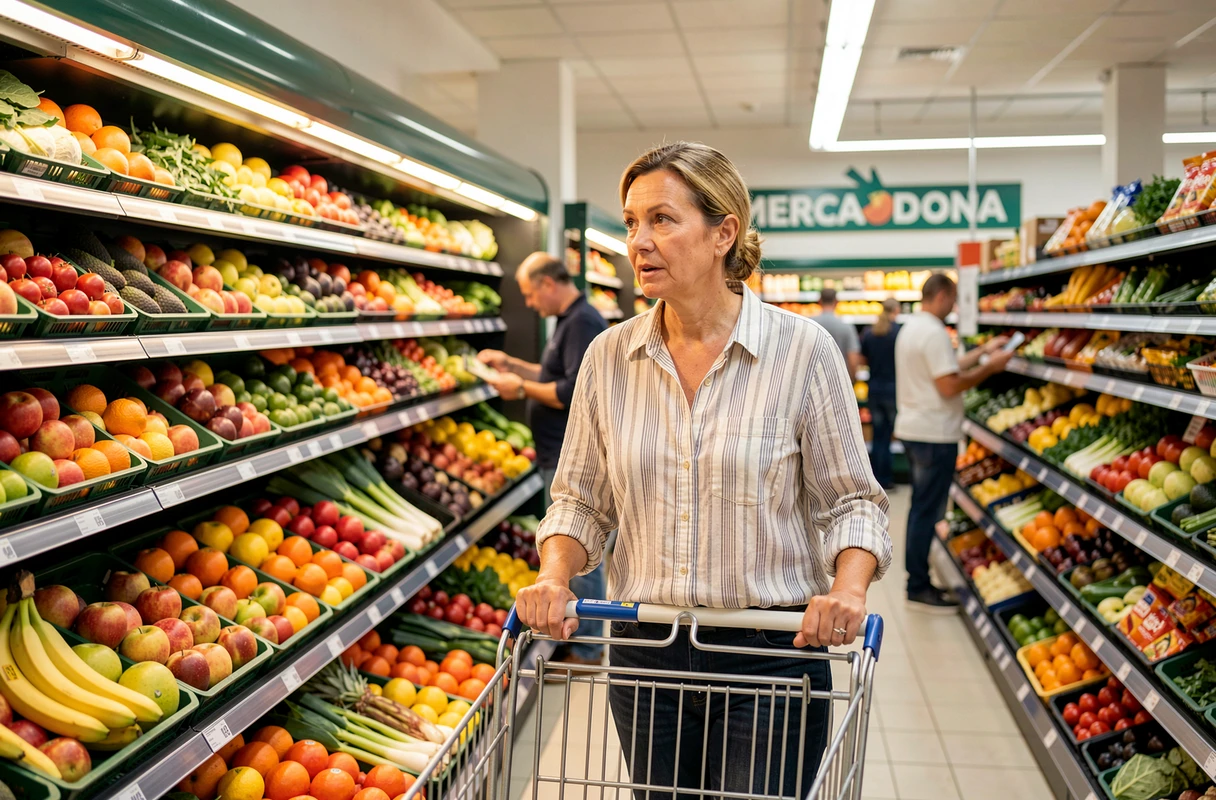
In food, the situation is more nuanced. Basic products (flour, olive oil, canned goods) are cheaper, but the unit difference remains low. The real interest lies in typically Spanish products: Iberian charcuterie, dried fruits, local sauces and condiments. These items simply have no equivalent in French supermarkets.
What does not justify the trip
Fresh products (fruits, vegetables, meats) are not meant to travel. The price gain is canceled out by the logistical constraints of transport. Basic hygiene products (toilet paper, tissues) take up space in the trunk for a negligible saving.
Focus your purchases on cosmetics, cleaning products, and Spanish food specialties. It is in these three categories that the balance between savings made and the constraints of the trip tips in your favor.
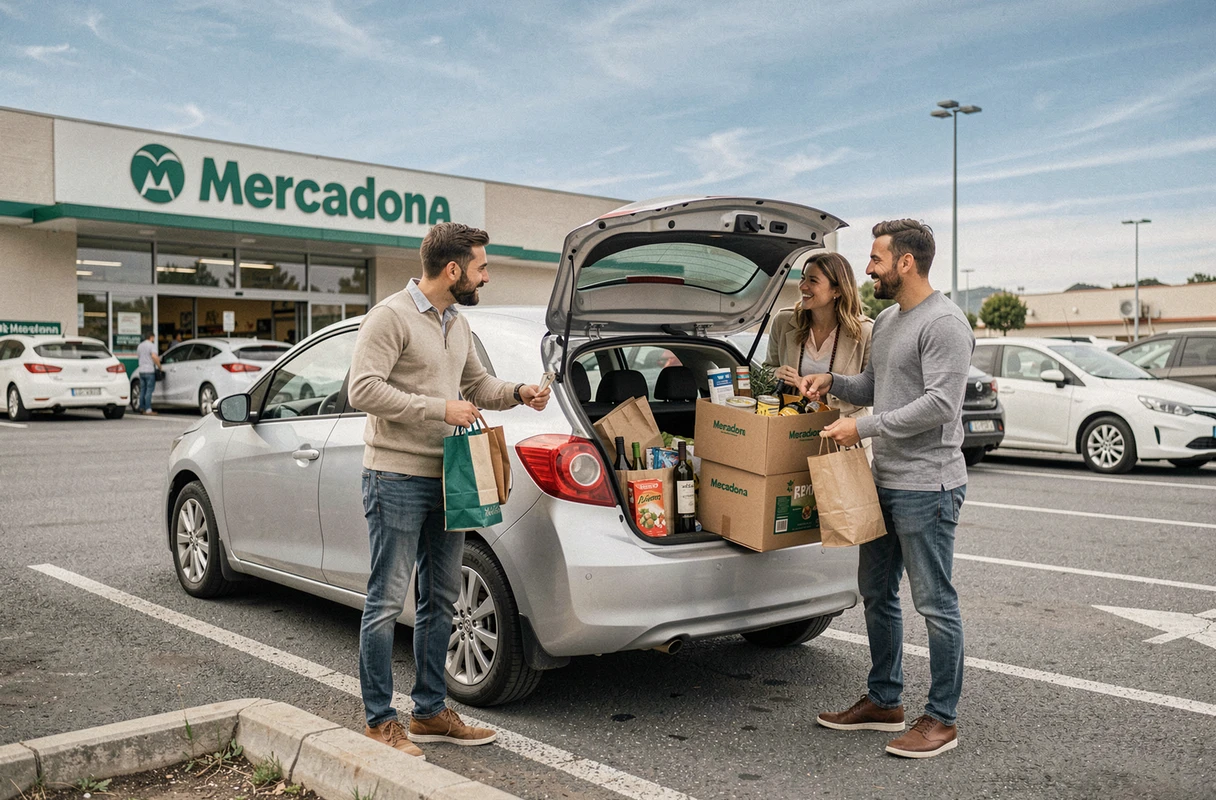
Mercadona in France: a presence that remains hypothetical
The chain generates real enthusiasm among French consumers. French-speaking Facebook groups dedicated to Mercadona products have tens of thousands of members who share opinions, photos of shelves, and shopping lists. This active community fuels hopes for an opening on French soil.
However, no official project for a presence in France has been announced by Mercadona. The chain operates without franchises or licenses. It manages its entire logistics chain, making any expansion abroad slow and costly. The only market outside Spain where Mercadona has established itself is Portugal, after several years of preparation.
The French grocery market is dense and competitive. Local chains (Leclerc, Carrefour, Intermarché) occupy the field with efficient drives and aggressive pricing policies. For Mercadona, establishing itself in France would mean replicating its entire logistics model, from warehouses to supplier agreements.
In the meantime, the border remains the only access. For residents of southern France, combining a shopping trip with an outing in Spain turns the constraint into pleasure. For others, the French drive remains the most rational option for everyday needs.