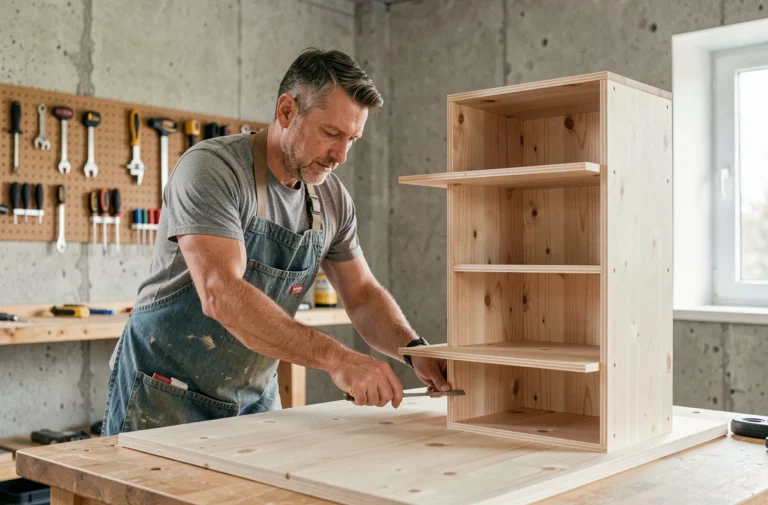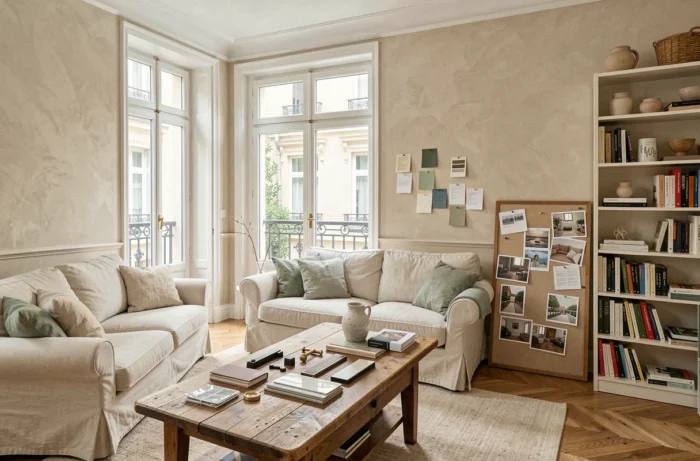
Transforming a house doesn’t happen with a complete makeover over a weekend. We recommend a targeted approach, action by action, focusing the budget on interventions that truly change the perception of space, light, and materials. Here are ten concrete tips to enhance your home without heavy renovations, selected for their measurable visual impact.
1. Multiply light sources instead of changing the chandelier
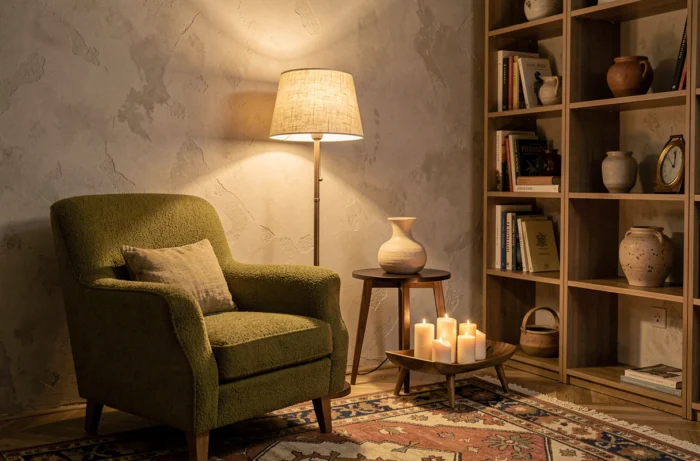
A single central ceiling light flattens the space and creates unflattering shadow areas. Multiplying light sources transforms a room more than changing accessories, as highlighted by recent guides from Good Housekeeping and Ideal Home.
We recommend at least three levels of lighting in living spaces: ambient lighting (hanging light or dimmed ceiling light), functional lighting (reading lamp, worktop spots), and accent lighting (wall sconce, LED strip behind a piece of furniture). By consulting the tips from lavenuedelamaison.fr on Tip Top Déco et Maison, you will find additional insights on positioning light fixtures in each room.
Favor consistent color temperatures within the same space. A mix of cool white and warm white in the living room creates visual discomfort that most inhabitants cannot identify.
2. Apply a textured coating on an accent wall
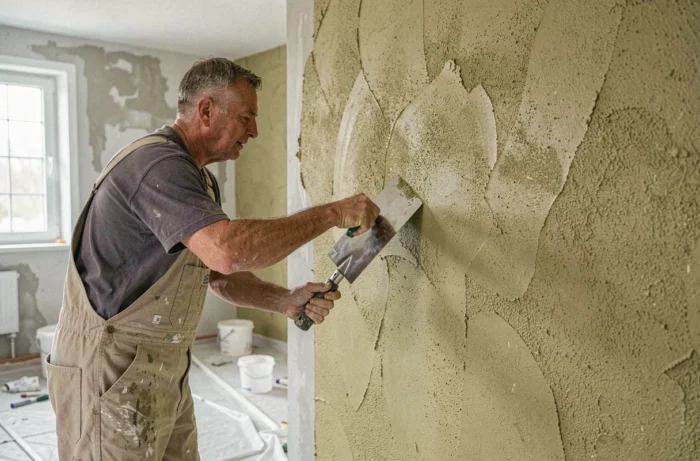
Uniform matte paint has dominated interior decoration for years. The 2025 trend reports from Architectural Digest and Maison & Travaux confirm a shift towards more enveloping atmospheres, with relief and texture on the walls.
A lime plaster, a tinted wash, or stucco applied to a single wall is enough to anchor the style of a room. The cost remains moderate since the treated area does not exceed a few square meters. Proper preparation of the surface (primer, sanding) is crucial for durability.
3. Replace handles and hardware throughout the house
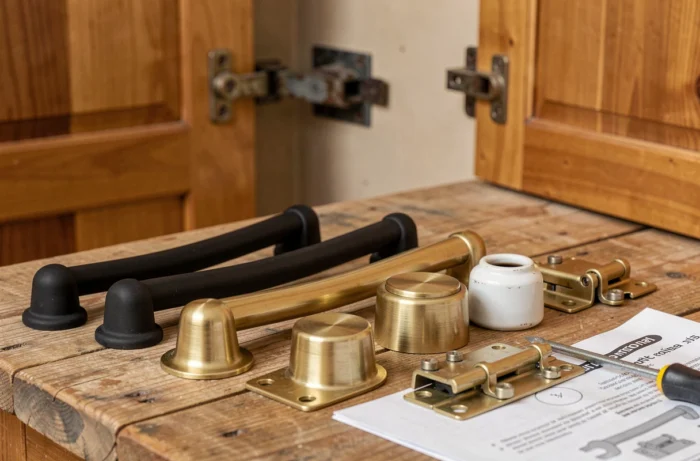
Hardware is the detail that no one notices but everyone feels. Door handles, drawer knobs, window locks: replacing them all with a consistent finish (brushed brass, matte black, satin stainless steel) instantly unifies the perception of your interior.
Plan for half a day to handle all the doors on a floor. The operation requires only a screwdriver and a drilling template if the spacing differs from the existing setup.
4. Embrace slow decorating for a lasting result
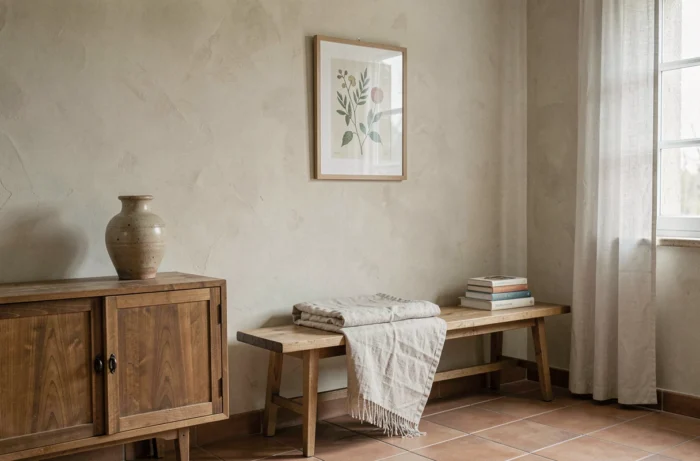
Slow decorating is gaining ground as a counter-model to quick makeovers. The New York Times (Wirecutter) and House Beautiful describe this approach as a logic of gradual purchases, reuse, and selection of durable items.
Specifically, we recommend not furnishing a room with a single order. Live with the empty space for a few weeks to identify real needs (additional seating, storage, surface area). An interior built in successive layers always appears more personal than a coordinated catalog.
5. Play with heights using asymmetrical furniture
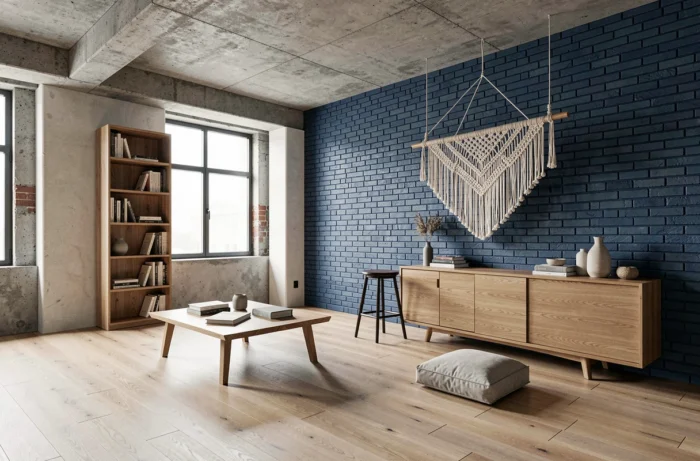
Aligning all furniture at the same height visually flattens the room. Introducing a tall bookshelf next to a low console, or hanging shelves at staggered levels, creates depth without touching the structural work.
In the living room, a coffee table lower than the norm (around the height of the sofa seat minus one third) elongates the perspective. In the dining room, a tall sideboard compensates for a table that takes up a lot of floor space.
6. Install curtains from ceiling to floor
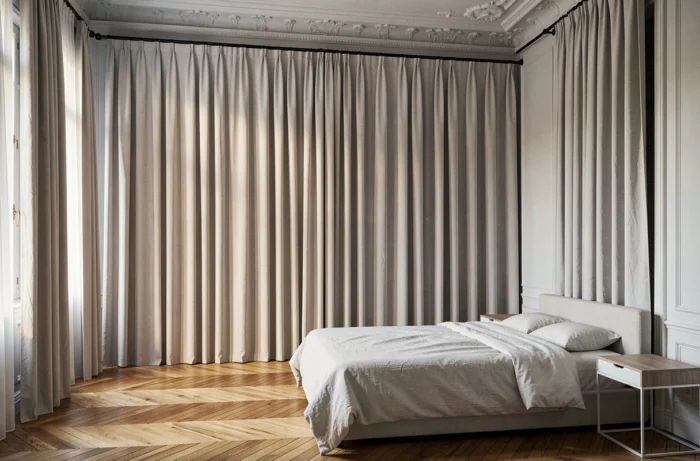
Fixing the rod flush with the ceiling rather than above the window visually raises the room by several perceived centimeters. The curtain should just touch the floor without dragging, with a clean fall.
Washed linen or thick cotton fabrics add texture without weighing down the space. Avoid synthetic sheers that yellow over time and prefer an opaque fabric lining if the room faces south.
7. Integrate raw wood in wet areas
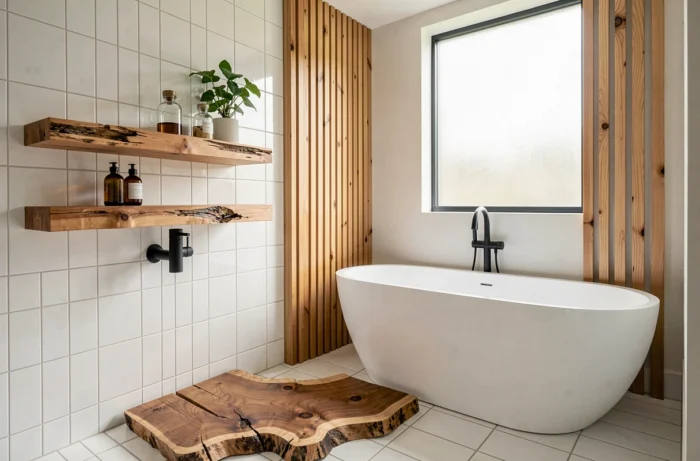
Wood in the bathroom remains underutilized for fear of moisture. A solid oak top treated with hard oil withstands splashes perfectly if maintained once or twice a year.
The effect is immediate: wood breaks the coldness of tiles and ceramics. We observe that this intervention often suffices to avoid a complete replacement of the sink and under-sink cabinet.
8. Create a wall composition with mixed frame sizes
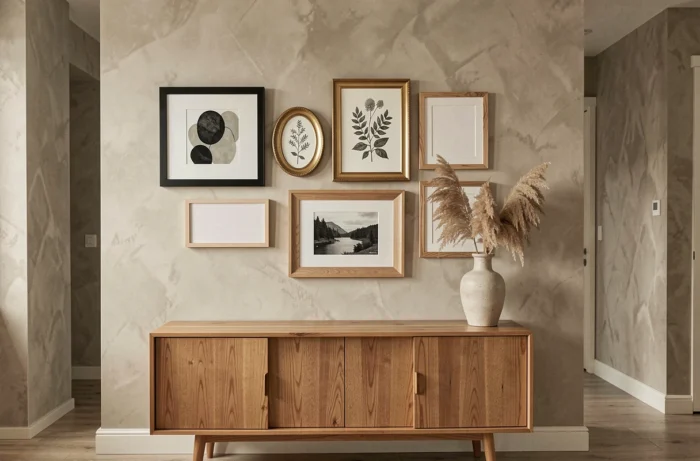
A successful wall composition relies on three technical rules:
- Maintain a constant spacing between each frame (between five and eight centimeters works in most configurations)
- Mix a maximum of three types of frame finishes (natural wood, black, white) to maintain coherence
- Lay everything on the floor first, photograph it, then transfer the positions to the wall with masking tape
Hanging a single large frame above a sofa is simpler, but a composition of five to seven pieces brings a visual density that interiors often lack.
9. Repaint baseboards and moldings in a contrasting shade
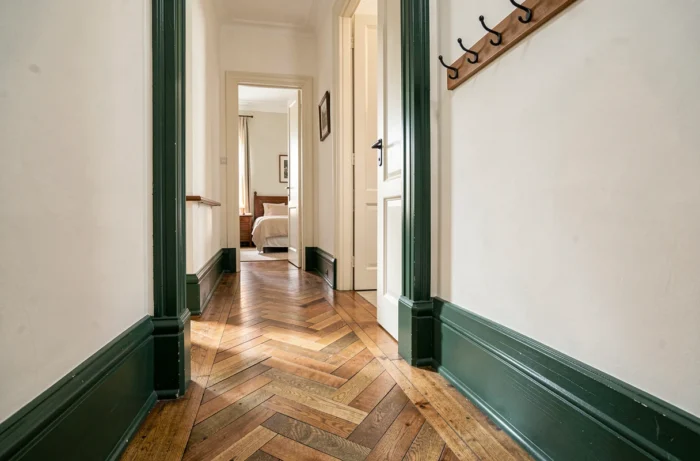
White baseboards on white walls erase the architectural lines of the room. Painting baseboards, casings, and window frames in a bold shade redefines the structure of the space.
A sage green, soft terracotta, or anthracite gray works on most light walls. Use satin paint for woodwork (better shock resistance) and matte for the walls.
10. Rearrange circulation in the living room without buying furniture
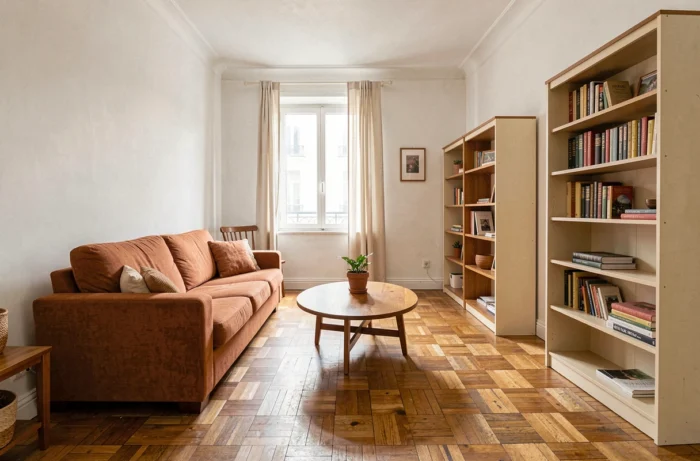
Pulling the sofa away from the wall by a few centimeters opens a circulation corridor that fluidizes the room. This gesture, which costs nothing, changes the dynamics of the living room more than a new rug.
We recommend testing at least two different layouts before finalizing the arrangement. Photograph each configuration in wide-angle from the entrance of the room: the photo reveals imbalances that the accustomed eye no longer perceives.
Each intervention listed here can be completed in a few hours, without a craftsman. Enhancing a home relies less on furniture budget than on the precision of choices: a well-placed light point, a texture on a wall, a baseboard that highlights the architecture. Start with the action that requires the least purchase and the most observation.