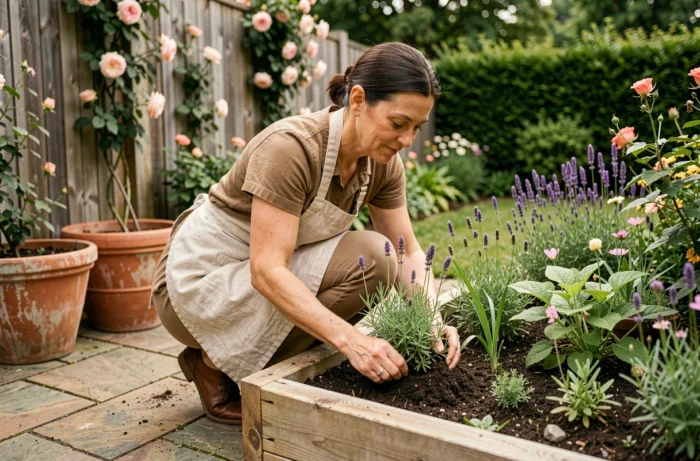
Clay soil that retains water in winter and cracks in summer does not decorate like well-drained sandy soil. Before choosing furniture or plants, it is the nature of the soil and the exposure that dictate the initial decisions regarding garden decoration and layout. Ignoring these constraints exposes one to plants that wither at the first dry summer and a terrace that warps after two winters.
Soil and exposure: the diagnosis that conditions the entire garden layout
One always starts by observing the land for several weeks. Where does water stagnate after rain? Which areas remain in the shade after noon? These answers guide the choice of terrace materials, the location of the relaxation area, and the selection of plants.
A compact and damp soil poorly supports slabs laid on a sand bed: they move. One then favors a structure on pedestals or a raised wooden deck that allows water to drain. Conversely, a draining and stony soil accommodates a mineral paving or stabilized gravel without any problem.
Exposure also conditions the comfort of use. A south-facing terrace without shade becomes unusable in July. Planning from the design stage for a pergola, a shade sail, or a deciduous tree (plane tree, albizia) that filters sunlight in summer and lets light through in winter radically changes the use of the space.
There are also many resources about Déco et Jardin info to cross-reference decoration ideas and technical constraints before getting started.
Drought-resistant garden decoration: suitable materials and plants
Departmental drought orders now distinguish between food-producing areas (vegetable garden, herbs) and strictly decorative spaces (ornamental lawn, flower beds). During restriction periods, watering purely decorative plants is the first prohibition. Designing a garden that remains beautiful without regular watering is no longer an aesthetic choice; it is a regulatory necessity.
Plants that thrive without summer watering
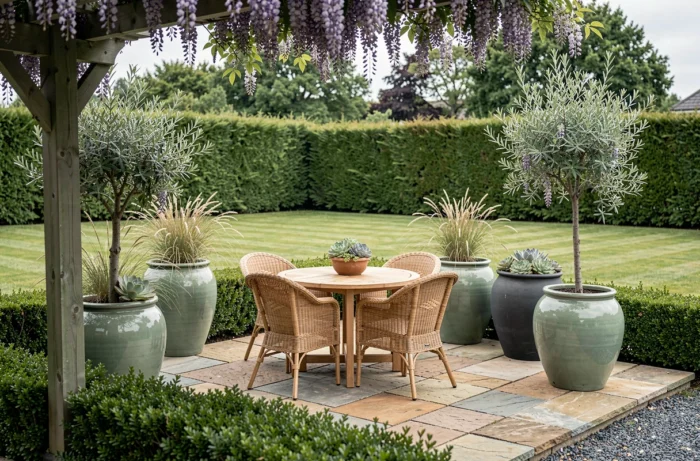
The Mediterranean garden is making a strong comeback, even in regions that are not Mediterranean at all. Lavender, cistus, shrubby sages, thyme, rosemary, and agaves can withstand weeks without water once well-rooted. They are combined with ornamental grasses (stipa, miscanthus) for volume and movement.
Planting in autumn rather than spring allows roots to settle during the wet months. The plant then faces its first summer with a deep root system, significantly reducing the need for supplementary watering.
Mineral and wood materials to structure the space
The mineral ambiance (pebbles, gravel, dry stone walls, pottery) advantageously replaces ornamental lawns in dry areas. One can create a dry riverbed with pebbles of varying sizes: this technique manages runoff while providing a permanent decorative element that requires no maintenance.
- Wood (treated autoclave pine, Douglas, larch) is suitable for terraces and flowerbed borders. It ages well, turning gray, but requires treatment or a choice of species suited to local humidity.
- Metal (corten steel, powder-coated aluminum) adds a design touch to planters and screens. Corten steel develops a rust patina that naturally protects it.
- Outdoor ceramics and stoneware resist frost and UV rays. They are used for terrace paving or wall cladding for a contemporary look.
Feedback on the durability of wood-plastic composite varies: some age well, while others warp after a few summers. Checking the manufacturer’s warranty and the thickness of the boards before committing remains the best precaution.
Outdoor lighting and furniture: creating a functional relaxation space
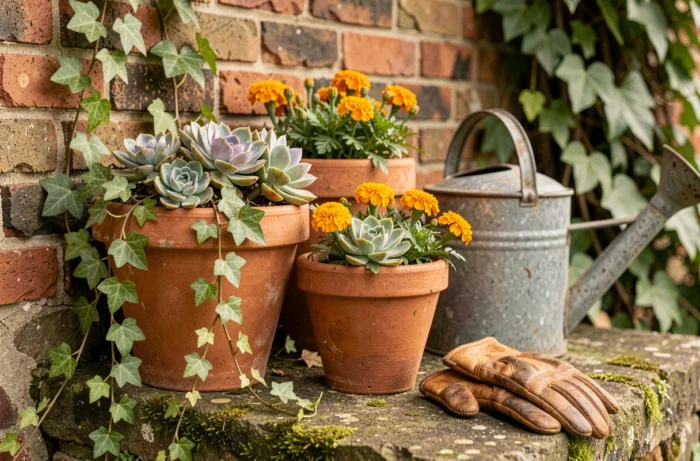
A garden that is only used during the day is a garden only half utilized. Lighting transforms an outdoor space into a living area as soon as night falls. There are three functions: security lighting (paths, steps), ambient lighting (string lights, recessed spots, solar lanterns), and highlighting plants (spotlights aimed at a tree, a flower bed, or a stone wall).
For paths, low solar bollards are sufficient in most cases. For reliable ambient lighting, one uses low-voltage wired (12 V) buried under conduit. Solar technology has improved, but its power remains limited for extended evenings.
Selecting furniture based on actual use
Before buying a large table for eight people, one should consider how many times a month they actually entertain outside. A modular low seating area (two armchairs, a bench, a side table) adapts better to daily use than an imposing table that remains empty most of the time.
- Aluminum is lightweight, does not rust, and is easy to clean. It is suitable for areas exposed to the elements.
- Wood (acacia, eucalyptus, teak) adds visual warmth but requires annual maintenance (oil or saturator).
- Woven resin offers a good aesthetic and durability compromise, provided one chooses a quality treated for UV resistance.
Storing or covering furniture in winter extends its lifespan by several seasons, regardless of the material chosen.
Garden zoning: separating spaces without partitioning
Dividing the garden into usage zones (relaxation, dining, play, vegetable garden, circulation) structures the space and avoids the “everything in the middle” effect. One can delineate without walls using changes in ground covering, differences in levels, or low hedges.
A border of wooden sleepers between the terrace and the flowerbed, a natural stone stepping stone leading to the back of the garden, different ground levels created with low walls: these gentle transitions guide the eye and movement without closing off the view.
Wood or perforated metal screens work well to obscure a view or an unsightly element (bins, composter, technical room) while allowing light to pass through. They can be adorned with low-maintenance climbing plants (star jasmine, trachelospermum) for a quick green effect.
Designing a garden hinges on decisions made early: the type of soil, orientation, and the maintenance budget one is willing to allocate each month. A simple garden that is coherent with its terrain always ages better than a spectacular garden built on unsuitable foundations.