Choosing a baby bouncer, stroller, or baby carrier is increasingly less about just price or color. Baby product brands are adapting their ranges to meet changing expectations: parents seeking durable products, a need for compactness for travel, and a growing focus on the well-being of both the mother and the infant. Here are the trends currently reshaping the industry.
Parental self-care: childcare is no longer just about the baby
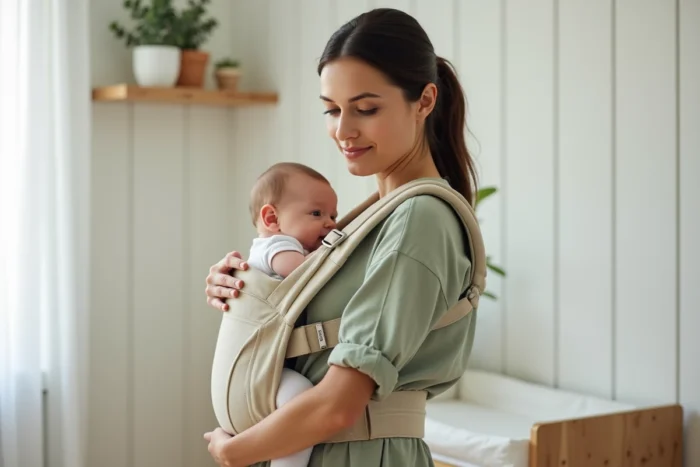
Have you noticed that the “newborn” sections now include postpartum recovery cushions, hands-free breast pumps, or carrying accessories designed for the wearer’s back? This shift has a name in the industry: the “mom & baby” segment.
Conversations about maternal well-being during pregnancy and postpartum have exploded on social media. Posts related to self-care during pregnancy have seen massive growth on social platforms in recent years. The topic of “loving yourself before loving your child” has surpassed 20 million views on Xiaohongshu.
This dynamic translates into products with dual benefits. A breast pump like the Momcozy Mobile Style M6, for example, can be worn under clothing and operates wirelessly. The goal is not just breastfeeding: it’s to allow the mother to keep her hands free, move around, and not interrupt her activities. The Carnet de Bébé news regularly features such innovations that blur the line between baby care and parental comfort.
This trend is not just a passing fad. It accompanies a change in discourse: young parents refuse to choose between their own health and that of their child. Brands that understand this are expanding their ranges to include physical recovery, parental sleep, and long-term ergonomic carrying.
Adaptive childcare products: buy less, use longer
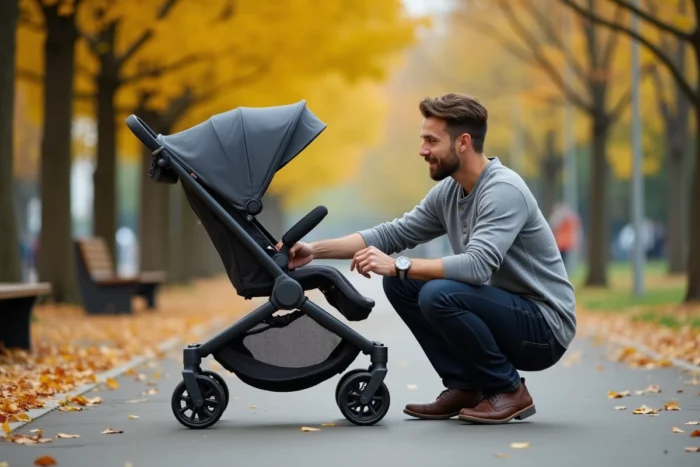
A bouncer usable from birth to 2 years, a stroller that converts into a compact cane, a car seat that covers multiple age groups: the adaptive product has become a major purchasing criterion. Why this choice?
The answer partly lies in the declining birth rate in France, which mechanically reduces sales volume. Families are buying fewer items but want them to last. Brands are responding with modular designs.
- The BabyBjörn Balance Soft bouncer offers three positions (play, rest, sleep) and supports the child until they are 2 years old, with a seat made from recycled polyester and cotton.
- The Ergobaby Metro 3 stroller folds with one hand and fits as cabin luggage, eliminating the need to buy a travel stroller in addition to a main stroller.
- The Doona car seat integrates a retractable stroller chassis: one product replaces two distinct pieces of equipment.
This adaptive shift has an interesting side effect on the second-hand market. A modular product retains its resale value better, which reassures buyers at the time of the initial investment.
Eco-friendly materials and safety: what’s changing for young parents
Eco-responsibility in childcare is no longer just a label on the packaging. Recycled fabrics, solvent-free paints for nursery furniture, and reduced packaging are becoming verifiable technical arguments.
Let’s take a concrete example: the DUOH! nursing pillow from Petits Cadors uses filling made from recycled fibers and a cover made from certified organic cotton. This is not just a marketing choice. Parents now check the composition of textiles that come into direct contact with the infant’s skin, just as they would for a food product.
On the safety side, home babyproofing is modernizing. Outlet covers, corner guards, and stair gates remain classics, but manufacturers are adding no-drill fastening systems suitable for rental properties. Some ranges incorporate temperature or humidity sensors in baby mattresses, with alerts sent to the parent’s phone.
How to read a childcare product label
Three points deserve special attention when purchasing:
- The displayed safety standard (EN 12790 for bouncers, ECE R129 for car seats) should be on the label and not just in the online description.
- The mention “BPA-free” or “phthalate-free” refers to plastic parts in contact with the child’s mouth. It does not necessarily cover the entire product.
- The country of manufacture and the testing location may differ. A product assembled in Europe has not necessarily been tested in a European laboratory.
Connected childcare and the limits of all-digital
Video baby monitors with sleep analysis, connected scales, bottles that measure the amount ingested: connected childcare appeals to tech-savvy parents. These devices provide a form of reassurance, especially for a first child.
The risk, documented by several early childhood professionals, is substituting a monitoring screen for direct observation. A sensor placed under the mattress detects breathing movements, but it does not replace physical contact or vocal interaction, which remain the pillars of infant development.
The connected device complements parental vigilance; it does not replace it. The most transparent brands indicate this in their manuals. A video baby monitor is useful at night or during a nap in another room, but not as a permanent substitute for presence.
The childcare market is reshaping around three axes: serious attention to parental comfort, product durability in the face of fewer purchases, and technology that knows its place. Families equipping themselves today have access to better-designed products than five years ago, and careful reading of technical specifications remains the best filter against marketing claims.