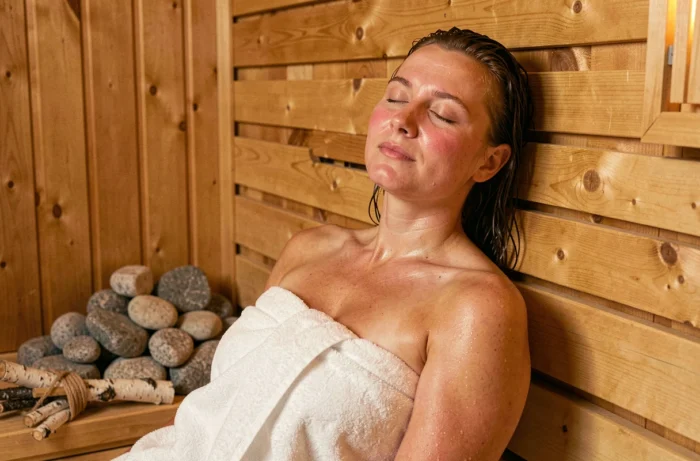
The sauna is a wooden cabin heated between 70 and 100 °C, where the humidity level remains low, generally below 25%. This intense dry heat causes abundant sweating and an acceleration of the heart rate comparable to that of moderate physical exertion. Originating from Finland, this practice has spread to wellness spaces around the world, but its actual effects on health deserve a closer look than the usual promises.
Observational Studies and Randomized Trials: What Science Really Shows
The majority of articles dedicated to the benefits of the sauna rely on large Finnish cohorts, notably the KIHD study (Kuopio Ischaemic Heart Disease Risk Factor Study). These data associate frequent sessions with a marked decrease in cardiovascular mortality and all-cause mortality. The problem: these are observational studies, unable to prove a cause-and-effect link.
More recent syntheses focusing on randomized controlled trials (passive heat, hot baths, sauna) provide a more nuanced picture. These trials observe only a moderate effect, primarily limited to a decrease in systolic blood pressure, with no significant improvement in other markers such as cholesterol, blood sugar, or heart rate variability over a few weeks.
In practical terms, the sauna offers real but more modest benefits than what many sites claim. Enthusiasts of saunaimelda.be will find in this distinction between long-term data and short-term results a useful criterion for adjusting their expectations.

Effects of the Sauna on Muscles and Recovery After Sports
The dry heat of the sauna dilates blood vessels and increases blood flow to muscle tissues. This mechanism, called peripheral vasodilation, promotes the relaxation of tense fibers after physical exertion.
A less commonly addressed angle in general content concerns the use of the sauna as a structured complement to exercise, rather than as an isolated practice. Recent clinical trials have compared a “exercise only” group to an “exercise + sauna” group. The latter group showed a more significant improvement in certain recovery parameters.
This does not mean that the sauna replaces warming up or stretching. Its value lies in the combination: the sauna extends the benefits of physical activity without replacing any.
Sauna and Relaxation: Physiological Mechanisms of Relaxation
The feeling of well-being experienced after a sauna session is not just subjective. Exposure to heat triggers the release of endorphins, the same molecules produced during prolonged exertion. The body interprets the rise in temperature as controlled stress, and the subsequent cooling phase activates the parasympathetic nervous system, responsible for returning to calm.
This heat-cold cycle explains why many users report better sleep quality on sauna session nights. The muscle relaxation combined with a decrease in blood pressure creates favorable conditions for falling asleep.
Conditions for Appropriate Relaxation
- Respect a session duration suited to one’s tolerance, starting with short sessions and then gradually increasing
- Alternate the time in the cabin with a cold shower or cool bath to activate thermal contrast
- Stay hydrated before, during, and after the session to compensate for water loss due to sweating
- Avoid the sauna immediately after a heavy meal, as digestion already significantly mobilizes blood circulation
Contraindications and Precautions for the Sauna to Know
The sauna is not suitable for everyone. People suffering from severe hypotension, unstable heart conditions, or certain skin disorders should consult a doctor before any session. Pregnancy is also a situation where practice is discouraged without medical advice.
A point often misunderstood: sweating in the sauna does not lead to fat loss. The weight loss observed on the scale after a session corresponds exclusively to water loss, which is regained as soon as rehydration occurs. Presenting the sauna as a weight loss tool is a myth.

Warning Signals During a Session
- Dizziness or a spinning sensation: exit immediately and lie down in a cool place
- Nausea or unusual palpitations: interrupt the session and drink water at room temperature
- Persistent redness or burning skin sensation: reduce the duration of future sessions and lower the position on the benches (the hot air rises)
Finnish Sauna, Infrared Sauna, and Hammam: Choose According to Your Needs
The traditional Finnish sauna operates by convection: a stove heats stones, and the ambient air temperature rises. The infrared sauna, on the other hand, uses panels emitting radiation that directly heats the body without raising the cabin temperature as much. The sensation is less intense, which may suit those sensitive to extreme heat.
The hammam is distinguished by its humid heat, with a humidity level close to saturation and lower temperatures. The effect on the respiratory tract differs: the hammam clears mucus, while the sauna acts more on blood circulation and musculature.
The choice depends on the desired objective. For sports recovery and deep relaxation, the Finnish sauna remains the reference. For a gentler approach or in cases of respiratory sensitivity, the infrared sauna or hammam are relevant alternatives.
The benefits of the sauna are based on well-documented physiological mechanisms, from vasodilation to the release of endorphins. The most solid data concern relaxation, muscle recovery, and improvement in joint comfort. In terms of cardiovascular health, long-term results are promising, but short-term experimental evidence remains modest. Adapting the frequency and duration of sessions to one’s own tolerance remains the best way to derive lasting benefits.